Those Who Walk Away from Omelas and Our Own "Cellars"
The Ones Who Walk Away from Omelas by Ursula K. Le Guin is a short story, but one that carries the weight of a lifetime—a truly shattering masterpiece.
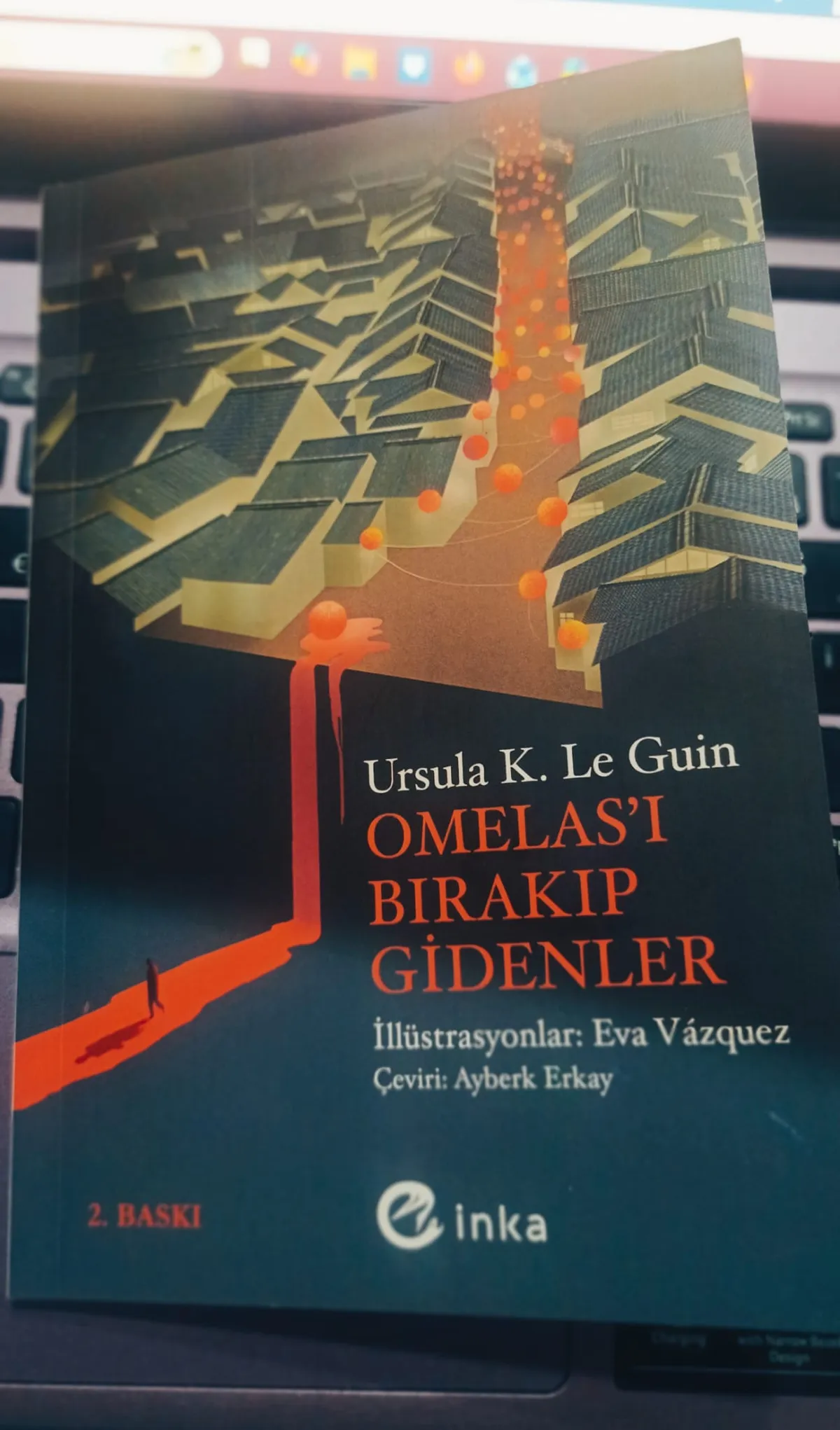
Imagine a city where everyone lives in perfect happiness and prosperity. There is no poverty, no boredom, no sickness, no sorrow, no war, and no bombs. It is hard to imagine, but there is only joy and celebration. Yet, the continuation of this utopia depends on one cruel condition: in a dark, damp cellar in the city, a child must live in eternal misery, isolation, and neglect. Thousands live in bliss at the expense of one child’s suffering. Those who cannot bear the weight of this moral dilemma walk away from the city into the unknown. But in Omelas, no one dares to say, "Let’s save the child." Everyone accepts the dark cellar so that the gears of their system do not stop.
This story reminds me of two things today. The first is the Palestinian cause. I recall the behavior of an Israeli participant at a conference I attended in the Netherlands recently. The person insisted that their own citizens were the victims, claiming they would be arrested if they traveled to places like Turkey or Lebanon. But the reality is that they live in comfort, built upon the misery of the Palestinian people. Just as no one in Omelas dares to save the child, no country acts to truly save Palestine. Europe, America, England, and China thrive, while Palestine, Syria, Africa, and East Turkestan suffer in misery. Often, the only thing we do is "walk away from Omelas."
I faced my own test during those conference days. When I learned I was assigned to stay in the same house as that Israeli participant, my conscience was shaken. I emailed the coordinator, stating that staying with this person did not align with my values, but I added that I would comply if no other solution could be found. I asked myself, "Did I fail this test?" I felt I had failed because I didn't feel sufficiently equipped as a Muslim, because my boycott was only half-hearted, and because I had momentarily fallen for the intoxicating comfort of the system.
But there was good news: I didn't end up staying in that house, and the person understood the reason. I chose to distance myself from them, even at the cost of being judged or ostracized by my international colleagues. I chose to be alone rather than compromise my conscience. I couldn't save the child in Omelas, and I couldn't fully walk away from the city, but I raised the idea of "leaving Omelas."
In real life, we face the dilemma of staying in or walking away from "Omelas" so often: standing by the side of the righteous at the cost of our professional comfort, defending the truth even when it makes us the "troublemaker" in our circles, or refusing to go along with a corrupt system even at the risk of being excluded. Those who can do this are the ones who can truly walk away from Omelas. To even consider that there is a place outside the system is a more honorable stance than becoming a cog in its machinery. Because not standing against evil is, in a way, an act of endorsing it. After all, if your happiness is built upon the suffering of another, is it truly happiness at all?